Oral Habits
How Oral Habits Influence the Airway
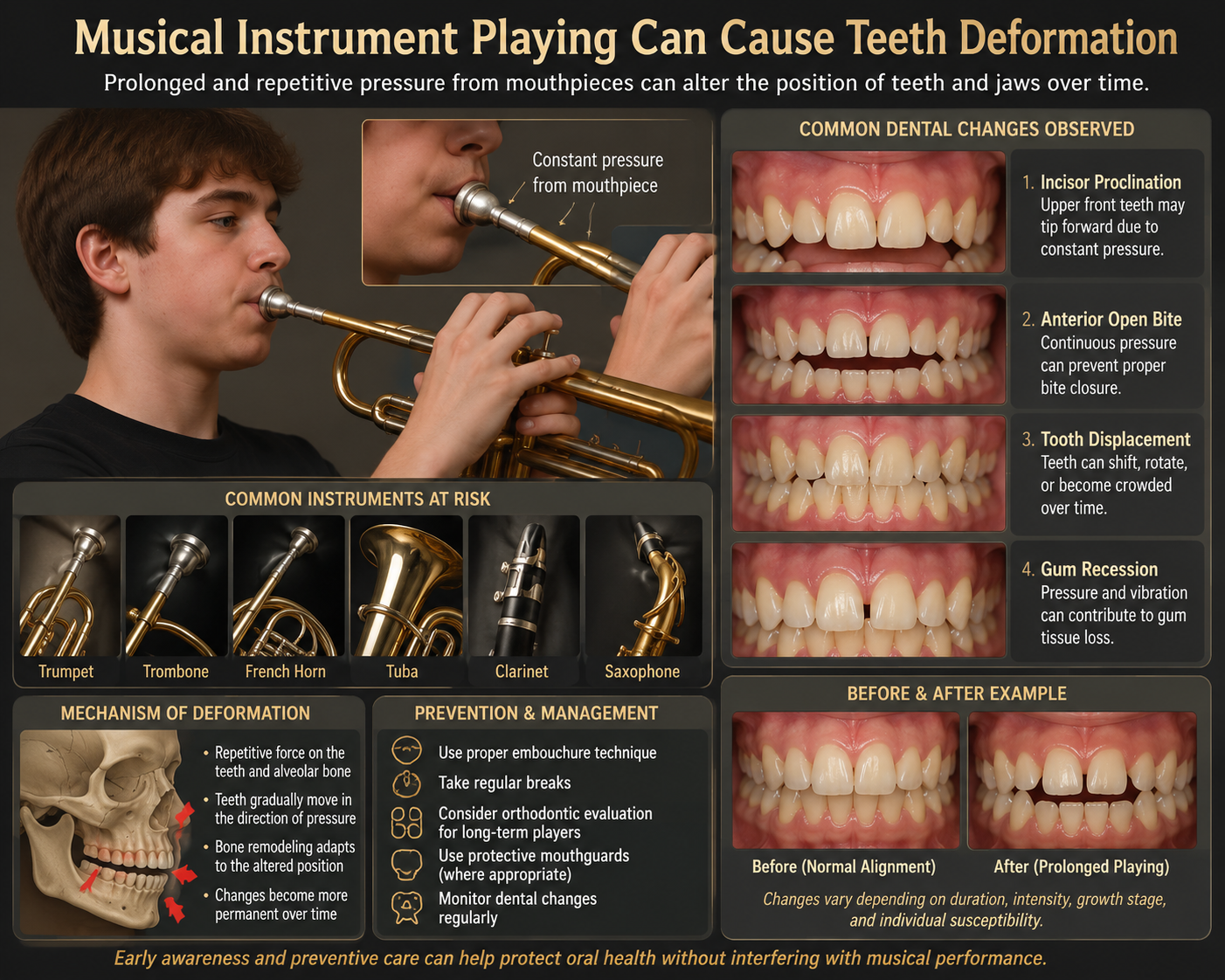
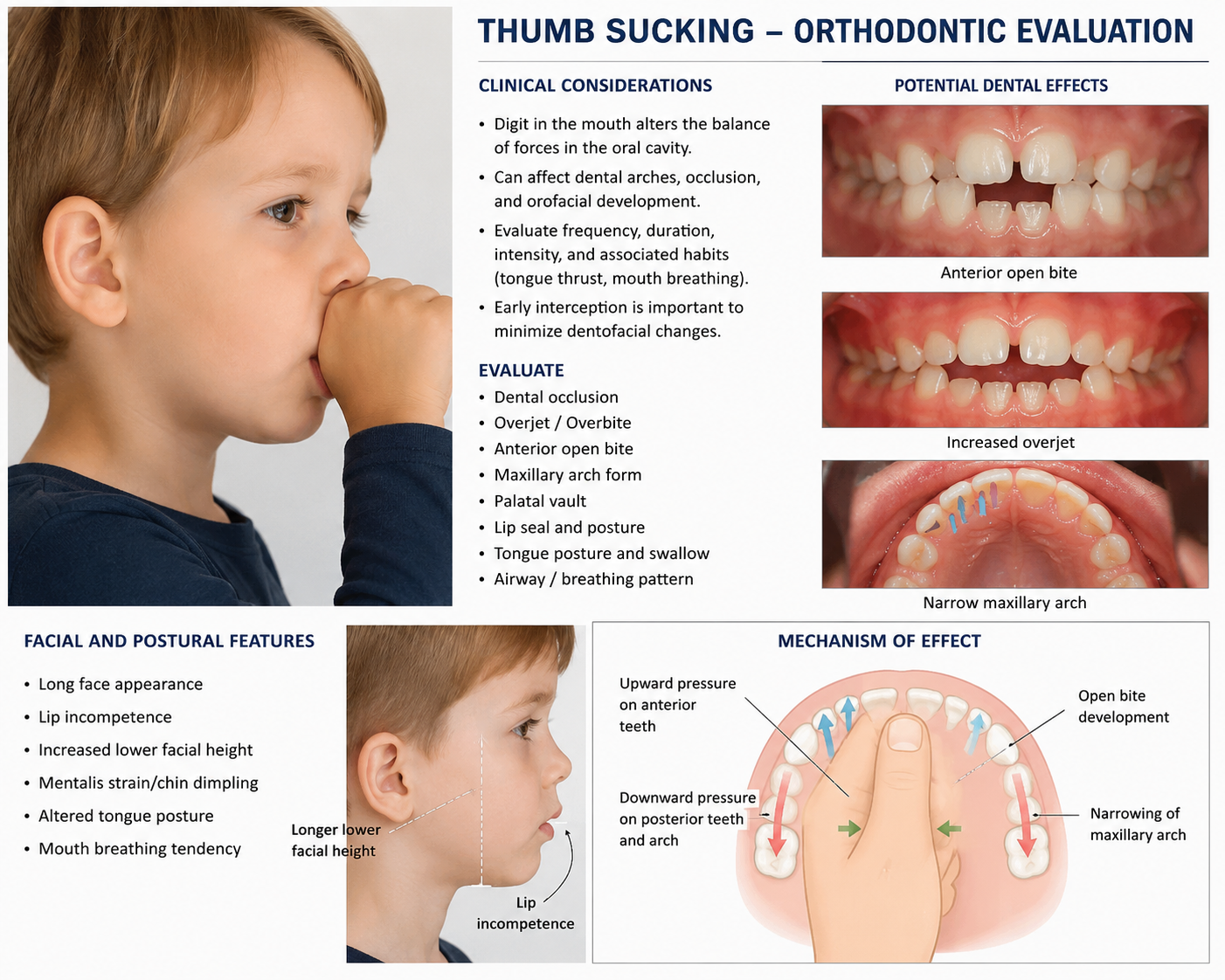
Oral habits can significantly influence the development and function of the oral complex, craniofacial structures, tongue posture, and airway. Habits such as chronic mouth breathing, thumb or finger sucking, pacifier use, tongue thrusting, lip biting, and abnormal swallowing patterns can alter the normal balance of forces between the tongue, lips, cheeks, teeth, and jaws.
When nasal breathing is compromised, a person may adopt a mouth-open posture to maintain airflow. This can change the resting position of the mandible and tongue. The tongue may assume a lower or more anterior posture, while the mandible may rotate downward and backward. Over time, these adaptations may influence craniofacial development and potentially contribute to reduced upper-airway dimensions in susceptible individuals.
An oral habit is often an adaptation to an underlying functional problem. Effective treatment should identify and address the cause of the habit rather than treating the habit alone.